
Buy Cannaburst gummies
What the Federal Hemp Ban Means for THC Gummies (2026 Guide)
Oct
By Carl Henderson, Cannaburst Gummies | Last updated: October 7, 2026 | Reviewed by: Rod Kight
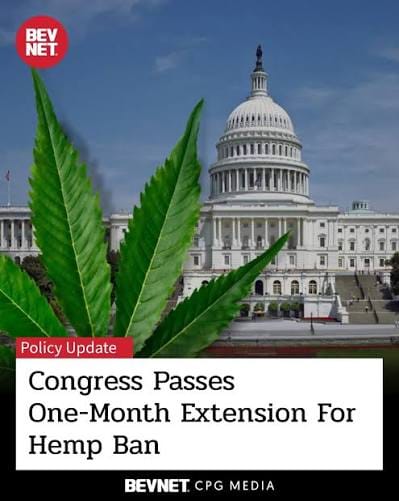
Quick answer: A federal law signed on November 12, 2025 redefines “hemp” and caps consumable hemp products at 0.4 mg of total THC per container. Most THC gummies sold as legal hemp products exceed that cap. The effective date was November 12, 2026, but Congress has passed a short-term delay to December 11, 2026 for most products. Unless Congress changes the law again, THC gummies sold outside state-licensed cannabis systems will lose their federal legal status.
The short version
- What changed: Congress rewrote the federal definition of hemp in Section 781 of Public Law 119-37, part of the spending bill that reopened the government in November 2025.
- The key number: 0.4 mg of total THC per container for consumable hemp products.
- The deadline: November 12, 2026, with a delay to December 11, 2026 for most products if the continuing resolution (H.R. 6500) is signed into law.
- Who is affected: Hemp-derived THC gummies, drinks, and similar edibles. State-licensed cannabis products follow a separate system.
- What you should do: Check your products’ lab reports, confirm your state’s rules, and follow updates on this page.
What the law actually changed
Before 2025, federal law treated a plant as hemp if it contained no more than 0.3% delta-9 THC by dry weight. That rule, created by the 2018 Farm Bill, is what allowed the hemp-derived THC gummy market to grow.
Section 781 changed that approach in two important ways:
- Total THC now counts. Instead of looking only at delta-9 THC, the new definition counts all THC, including forms that convert into delta-9. This also pulls in converted cannabinoids such as delta-8 THC, delta-10 THC, HHC, and similar compounds.
- A per-container cap for consumables. Finished products meant for human consumption are limited to 0.4 mg of total THC per container.
Industry estimates suggest the new standard would make roughly 95% of existing hemp-derived cannabinoid products federally unlawful if it takes effect as written.
The 0.4 mg rule in plain math
A typical THC gummy contains somewhere between 2.5 mg and 10 mg of THC. A container with even one gummy at that strength exceeds the cap many times over.
For a standard 10-count package to stay under the cap, each gummy would need to contain about 0.04 mg of THC, which is far below the level that produces noticeable effects. In practice, this means intoxicating hemp-derived gummies cannot remain federally compliant under the new definition.
The cap applies per container, not per serving, so splitting a product into smaller servings does not change the result.
Timeline: what happens and when
| Date | What happened or happens |
|---|---|
| December 2018 | The Farm Bill legalizes hemp using the 0.3% delta-9 THC standard |
| November 12, 2025 | Section 781 is signed into law with a one-year transition period |
| September 1, 2026 | Congress passes a continuing resolution (H.R. 6500) that includes a hemp delay; the House vote was 370-48 |
| November 12, 2026 | Original effective date. Some provisions, including those covering cannabinoids that cannot be naturally produced by the cannabis plant, still apply on this date |
| December 11, 2026 | New effective date for most of the ban, if the continuing resolution is signed into law |
Status note: At the time of writing, reports indicate the bill was sent to the President for signature. Confirm its current status before relying on the December date.
What the delay does and does not do
The delay is short, about 29 days. It does not repeal the ban, and it does not create a regulatory framework for hemp THC products. It simply gives Congress and the industry more time to negotiate.
Two things to keep in mind:
- Part of the law still applies on November 12. Products containing cannabinoids that are not capable of being naturally produced by the cannabis plant are treated differently from the rest.
- State laws do not automatically move with the federal date. Many states have already adopted the new definition, and their rules may take effect on their own schedules.
Who is affected
Hemp-derived THC gummies. These are the most directly affected. Whether made with delta-9, delta-8, or other THC forms, they generally exceed the 0.4 mg cap.
State-licensed cannabis products. Gummies made and sold within a state’s regulated cannabis program operate under state law, not the hemp definition. They are generally limited to sale within that licensed system and cannot be shipped across state lines.
CBD and non-intoxicating products. Products with total THC under the cap remain within the federal definition. However, some industry groups warn that the strict per-container limit could affect CBD products that contain trace THC, so testing and labeling matter.
Retailers and online shops. Payment processors are already adjusting. For example, Square told merchants to remove hemp and CBD items from their catalogs by October 15, ahead of the federal dates.
The state-by-state patchwork
Even before the federal change, state hemp and cannabis laws varied widely. Some states ban hemp-derived THC edibles entirely, some regulate them through licensed retailers, and some follow the federal definition automatically.
We are building verified guides for individual states. Until then, check your state’s official department of agriculture or cannabis control board website for current rules.
How to tell if a gummy is compliant
Use this checklist when evaluating any THC or hemp gummy:
- Read the lab report (COA). Look for the total THC result and confirm it is from an independent, accredited lab.
- Check the batch number. The report should match the batch printed on the package.
- Look for total THC, not just delta-9. A report that lists only delta-9 may hide the full picture.
- Confirm the source. A trustworthy brand states whether the THC is hemp-derived or comes from a state-licensed cannabis program.
- Check the ingredient list. Every ingredient should be named. For example, a label that lists only “cannabis oil” without naming the source is incomplete.
- Verify age restrictions. Legitimate sellers require buyers to be 21 or older.
- Be cautious of candy-style packaging. Lawmakers have cited look-alike packaging as a concern, and compliant brands avoid imitating popular snacks.
What this means for Cannaburst customers
- Where our THC comes from: [Hemp-derived / state-licensed cannabis program]
- Our current total THC per package: [X mg, see batch COAs]
- Where we currently sell and ship: [States]
- What we are doing about the federal change: [Compliance plan, product updates, or timeline]
- Our ingredients: Cannabis oil, sugar, glucose-fructose syrup, malic acid, citric acid, and natural apple flavoring (varies by batch flavor). Batch-specific lab results are available here: [link].
We will update this page as our products and the law change.
What could still change
The outcome is not settled. Several things could shift the picture:
- A federal regulatory framework. Several members of Congress have introduced bills that would regulate hemp products rather than ban them, including proposals focused on age limits, labeling, and packaging.
- Further delays. Earlier proposals sought extensions of one to two years. Whether another extension passes is uncertain.
- Political pressure on both sides. Industry groups and some lawmakers want the ban softened, while other lawmakers, state attorneys general, and advocacy groups want it enforced. Thirty-five state and territory attorneys general urged Congress to let it take effect as written.
- Executive action. A December 2025 executive order asked Congress to update the hemp definition to preserve access to CBD and also pushed for marijuana rescheduling. Rescheduling marijuana and changing the hemp definition are separate processes, so one does not automatically fix the other.
- Court challenges. Hemp-related lawsuits are active at the state level, and federal litigation is possible.
Frequently asked questions
Are THC gummies illegal now?
Not yet at the federal level. The new definition takes effect on November 12, 2026, or December 11, 2026 for most products if the delay is signed. State laws may already restrict them, so check your state.
Does the ban apply to CBD gummies?
It applies to any consumable hemp product above the total THC cap. CBD gummies with trace THC may still be affected if they exceed 0.4 mg per container, so lab testing matters.
What is the difference between hemp-derived THC and cannabis-derived THC?
Hemp-derived THC comes from plants meeting the federal hemp definition and has been sold through general retail and online channels. Cannabis-derived THC comes from state-licensed marijuana programs and is sold through regulated dispensaries within a single state.
Will the ban be repealed or delayed again?
It is possible, but no one can say for certain. Proposals for regulation and further delay are pending, and we will update this page as they move.
Can I still buy hemp THC gummies online?
Until the effective date, availability depends on your state and the seller. After the effective date, selling them federally as hemp will no longer be legal, and sellers and payment processors may stop offering them earlier.
Is this legal advice?
No. This article is general information. Consult a licensed attorney about your specific situation.
Sources
- Public Law 119-37 (full text), Congress.gov
- Congressional Research Service, “Changes to the Statutory Definition of Hemp and Implications for Agricultural Policy,” September 28, 2026
- Saul Ewing, “Congress Enacts Hemp THC Products Ban”
- Mondaq, “Hemp Industry Alert: Federal Ban on Hemp-Derived THC Products”
- WECT, “THC products face federal ban under new spending bill”
- Bloomberg Government, “Hemp Ban Delay Passed by Congress After Blowback From Hardliners,” September 1, 2026
- Cannabis Law Report, “Most of the federal hemp ban delayed until December 11”
- Cannabis Legalization News, “Senate Hemp Ban Delay Passes on 61-32 Vote”
- NACS, “Hemp-Derived THC”
- GreenState, “Congress moves to delay federal hemp ban”
This article is for informational purposes only and is not legal, medical, or financial advice. Cannaburst products are intended for adults 21 and over. Keep out of reach of children and pets. Laws change frequently, so verify current rules in your state.

Pingback: Hemp-Derived THC vs. State-Licensed Cannabis: What's the Legal Difference? - cannaburstgummiesofficial.com